OpenClaw phishing risk: sender identity checks before your agent acts
Fast answer: phishing is different when the target is an action-taking agent. The attacker is not only trying to steal a password. They may be trying to make the agent share files, expose secrets, invite a user, create an OAuth app, change billing, or send an external email. Validate who is asking before the agent acts.
Recent security coverage, including TechRadar, Cisco, and HiddenLayer, points to the same uncomfortable pattern: agents with email, browser, file, shell, or workspace tools can be manipulated if identity and action authorization are treated as ordinary prompt context. This checklist focuses on the missing layer: sender validation before action.
The minimum sender-validation rule
Before a hosted OpenClaw agent acts on an email or chat request, verify the sender domain, known contact, channel allowlist, request history, and task sensitivity. A familiar name is not enough.
Risk tiers for OpenClaw actions
| Tier | Examples | Required control |
|---|---|---|
| Low | Summarizing public docs, drafting internal notes, reading non-sensitive pages. | Normal tool logging and workspace visibility. |
| Medium | Editing internal files, changing settings, sending a non-sensitive message. | Known sender plus reversible action review. |
| High | Sharing files, adding users, exposing env vars, creating OAuth apps, changing billing, sending external emails. | Out-of-band confirmation and explicit approval before action. |
Identity checks before action
- Check the actual sender address. Compare the address and domain, not the display name.
- Check the expected channel. A finance request in a new chat channel should be treated differently from the normal approved channel.
- Check relationship history. If the person has never asked for this class of action before, escalate.
- Check urgency language. Urgent, secret, or exception-based requests should lower trust, not raise priority.
- Check whether the action changes access. User invites, OAuth apps, secrets, billing, and exports need explicit confirmation.
- Record the decision. Keep comments, approvals, tool calls, or issue history so the action can be audited later.
Hosted OpenClaw controls to use
Managed hosting does not make phishing disappear. It gives teams a better place to enforce boundaries. In Lobsterland, use isolated instances, environment-variable boundaries, workspace visibility, hosted browser separation, explicit manual confirmation for sensitive actions, and audit-friendly comments or task trails. The point is not to make the model "smarter" about every impersonation attempt. The point is to make risky actions require identity proof.
- Add allowlists for trusted requesters and trusted channels.
- Keep provider keys, API tokens, and environment variables outside prompts and chat transcripts.
- Require confirmation for sharing files, adding users, exposing env vars, creating OAuth apps, changing billing, and sending external emails.
- Inspect recent tool calls after suspicious requests.
- Rotate credentials after any unauthorized action, not only after proven data loss.
Team playbook
Add a short standing instruction to every production agent: verify identity before action, require out-of-band confirmation for high-risk requests, and refuse secret exposure through chat or email. Then test it with realistic requests: a fake vendor asking for a data export, a spoofed executive asking for a billing change, a teammate asking the agent to invite a new user, and a support thread asking for an environment variable.
This is intentionally narrower than a general prompt-injection checklist. For broader hardening, use the existing guides on prompt injection defense, API-key security, and self-hosted security hardening.
Useful next steps
- OpenClaw cloud hosting
- OpenClaw prompt injection defense
- OpenClaw API-key security
- Work device security policy
- Workplace adoption security playbook
- Lobsterland answer hub
Stop babysitting your OpenClaw box
Fix it once — or stop fixing it for good.
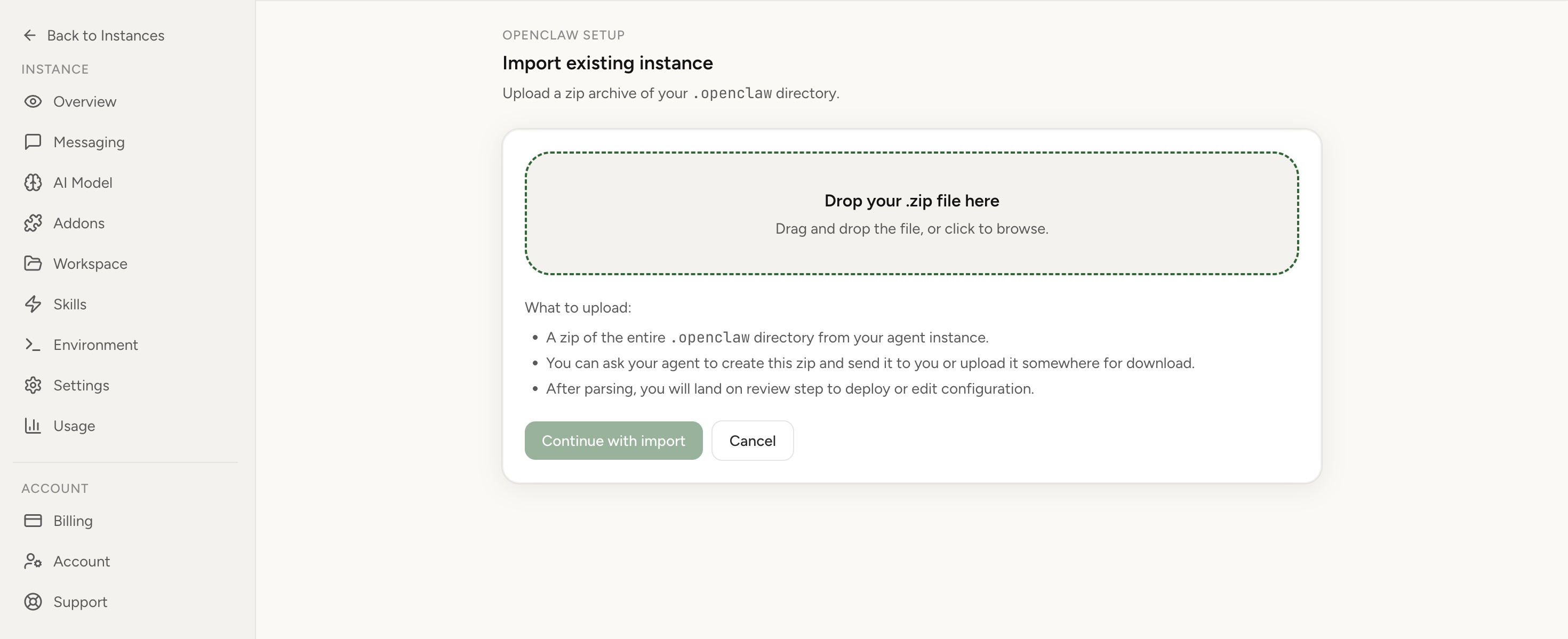
Apply the checklist above and keep self-hosting, or skip the maintenance entirely: run your OpenClaw on managed hosting from $6.90/mo, starting with a 7-day free trial. We handle the stale locks, gateway restarts, version upgrades, and uptime — and you can import your existing instance in a couple of minutes. Cancel anytime.
- Managed hosting handles stale
.jsonl.lockfiles, gateway restarts, and version upgrades for you - Import your existing OpenClaw setup in minutes — keep your channels and configuration
- The optional $199 setup is scoped: no custom development, enterprise/SRE support, or unsupported self-hosting repair
If you would rather compare options first, review OpenClaw cloud hosting or see the best OpenClaw hosting options before deciding.