AI Coding Agents in GitHub Actions: Secret Exposure Checklist Before You Automate
Quick verdict: AI coding agents in GitHub Actions change the threat model for CI/CD. Untrusted issue text, pull-request descriptions, comments, and generated code can become prompt input for an agent that also has tools, network access, repository write permissions, and secrets. Treat the workflow like a privileged automation surface, not just another linter job.
Traditional CI jobs usually run deterministic scripts. Agentic jobs can read untrusted text, decide which commands to run, call external services, edit files, and summarize results. Microsoft’s 2026 research on Claude Code GitHub Action showed how untrusted GitHub content can influence an AI workflow that has access to repository secrets and runner capabilities. The right response is not panic; it is a stricter boundary model.
Pre-flight checklist
- Map every secret: list repository, organization, environment, cloud, package-registry, model-provider, and webhook secrets visible to the workflow.
- Classify trigger trust: separate trusted branch pushes from pull requests, issue comments, labels, slash commands, and external contributor events.
- Minimize token scope: default
GITHUB_TOKENto read-only and grant write scopes only to jobs that truly need them. - Require human approval for risky events: do not let arbitrary issue or PR text immediately unlock a secret-bearing agent run.
- Disable unnecessary egress: treat outbound network access as a data-exfiltration path, especially when model output can choose commands.
- Pin agent actions: use trusted versions or SHAs for actions that receive secrets, repository content, or privileged tokens.
- Keep logs safe: assume summaries, tool traces, and uploaded artifacts may accidentally include secret-adjacent context unless redaction is enforced.
Threat model by workflow surface
| Surface | What can go wrong | Safer default |
|---|---|---|
| Issue and PR text | Prompt injection instructions are embedded in content the agent reads. | Treat it as untrusted input and require an explicit approval gate before secret-bearing jobs run. |
| Workflow secrets | A command, artifact, model call, or network request can leak credentials. | Use environment-scoped secrets, short-lived credentials, and read-only tokens by default. |
| Runner network | The agent can send code, logs, or secrets to arbitrary hosts. | Constrain egress and record which hosts are required for the workflow to function. |
| Repository writes | Generated changes can alter CI, dependency scripts, or release automation. | Write to a branch, require review, and keep deployment credentials out of the editing job. |
| Artifacts and summaries | Debug output can persist sensitive values after the job completes. | Scan artifacts, redact logs, and avoid uploading full environment dumps. |
A safer GitHub Actions pattern
- Use one low-privilege workflow to analyze untrusted PR or issue content without production secrets.
- Move privileged write or deployment work into a separate workflow that requires maintainer approval.
- Pass only narrow, structured outputs between stages instead of giving the agent the whole secret-bearing environment.
- Keep cloud credentials short-lived and scoped to the exact environment being changed.
- Record allowed network destinations for model APIs, package registries, code hosts, and internal systems.
Questions to answer before enabling an AI CI agent
- Can an external contributor trigger the workflow?
- Does the workflow read issue bodies, PR descriptions, comments, commit messages, or generated files?
- Which secrets are present when the model can request tool calls?
- Can the job open network connections beyond the code host and model provider?
- Can the agent modify workflow files, release scripts, infrastructure code, or dependency installation hooks?
- Who reviews the generated diff before it reaches a protected branch or deployment environment?
Where managed agent hosting helps
Lobsterland is not a replacement for GitHub Actions policy, but it gives teams a cleaner place to run long-lived agents when CI is the wrong trust boundary. Isolated hosted runtimes, encrypted credentials, allowlist controls, browser support, and usage analytics make it easier to separate review work from secret-bearing deployment work. Start with the Lobsterland security model, compare managed vs self-hosted OpenClaw, review cloud-hosted OpenClaw boundaries, and use Paperclip Workspace for delegated review flows before putting an agent in CI.
Sources
- Microsoft Security: Securing CI/CD in an agentic world
- StepSecurity: securing Claude Code in GitHub Actions with Harden-Runner
- Lobsterland OpenClaw cloud hosting
Stop babysitting your OpenClaw box
Fix it once — or stop fixing it for good.
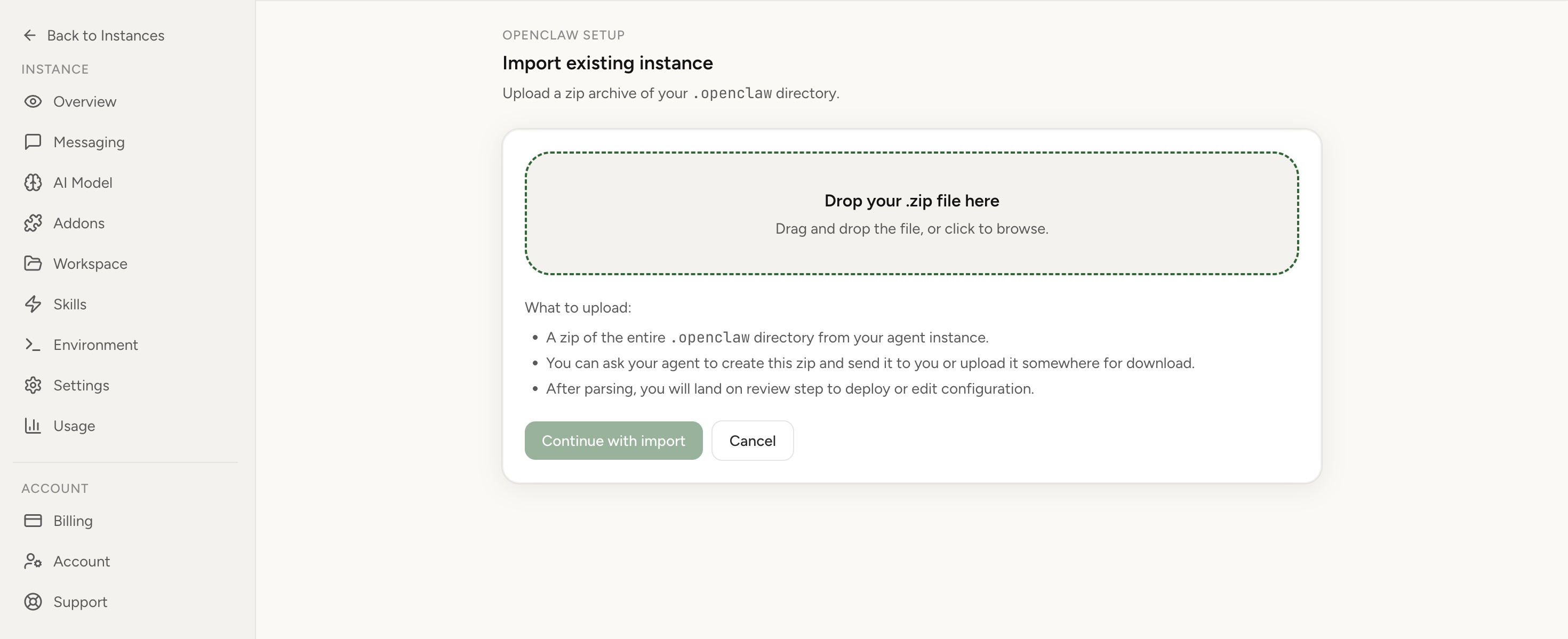
Apply the checklist above and keep self-hosting, or skip the maintenance entirely: run your OpenClaw on managed hosting from $6.90/mo, starting with a 7-day free trial. We handle the stale locks, gateway restarts, version upgrades, and uptime — and you can import your existing instance in a couple of minutes. Cancel anytime.
- Managed hosting handles stale
.jsonl.lockfiles, gateway restarts, and version upgrades for you - Import your existing OpenClaw setup in minutes — keep your channels and configuration
- The optional $199 setup is scoped: no custom development, enterprise/SRE support, or unsupported self-hosting repair
If you would rather compare options first, review OpenClaw cloud hosting or see the best OpenClaw hosting options before deciding.