Hostinger One-Click OpenClaw vs Lobsterland Managed Hosting: What Non-Technical Users Actually Need
Quick verdict: Hostinger's one-click OpenClaw path is a useful low-cost VPS/template route if you want inexpensive infrastructure and are comfortable troubleshooting. Lobsterland is for people who want OpenClaw operated as a managed, always-on agent service rather than as a server they personally maintain.
The difference matters most for non-technical founders, operators, and small teams. A one-click install can remove the first setup hurdle, but it does not automatically decide who owns channel pairing, provider keys, update regressions, gateway restarts, browser recovery, backups, or support when the agent stops replying in a business chat.
- Hostinger's OpenClaw application page advertises one-click OpenClaw on VPS plans, Docker Manager, weekly backups, DDoS/firewall/monitoring, and support channels.
- Hostinger's announcement positions the flow as removing manual installation barriers, while still being Hostinger-hosted infrastructure.
- TechRadar's VPS guide notes that production OpenClaw benefits from more CPU/RAM and still requires provider keys, channel setup, and operational choices.
- Community threads show the support boundary is a real buyer question: users ask whether Hostinger managed OpenClaw is enough, while another thread reports one-click setup friction and dashboard confusion.
What Hostinger's one-click offer is good for
Hostinger is appealing because it compresses the install path. You get a VPS, an OpenClaw application template, infrastructure controls, weekly backups on supported plans, Docker-oriented management, and a familiar hosting account. If your goal is to experiment cheaply or learn how OpenClaw behaves on a VPS, that is a credible starting point.
It is also a better fit when someone on your team wants server ownership. That person can inspect logs, change firewall rules, upgrade the instance, recover failed containers, rotate keys, and decide when to move from a small plan to more CPU and memory. The low monthly server price makes sense when that operator time is available.
What one-click does not automatically solve
- Channel pairing: Telegram, Slack, WhatsApp, and other channels still need tokens, routing, testing, and recovery procedures.
- Model/provider setup: OpenClaw still needs provider choices, API keys or OAuth, fallback logic, and cost limits.
- Secrets hygiene: a VPS can hold powerful tokens; someone must decide where keys live and how they are rotated.
- Update regressions: OpenClaw changes quickly, so production teams need snapshots, rollback paths, and post-update checks.
- Gateway debugging: a server can be online while chat delivery, browser tools, or scheduled jobs are failing.
- Support ownership: generic VPS support and agent-operation support are different jobs.
Decision table
| Need | Hostinger one-click OpenClaw | Lobsterland managed hosting |
|---|---|---|
| Lowest starting server bill | Strong fit when you can self-operate the VPS. | Not optimized for the cheapest raw server. |
| No Linux or Docker maintenance | You still own the VPS and runtime decisions. | Better fit: runtime operations are part of the product. |
| Always-on business chat | Viable with careful monitoring and recovery work. | Designed around hosted, isolated, always-on agents. |
| Browser-capable agent workflows | You own browser setup, profiles, and recovery. | Hosted browser support is available from the dashboard. |
| Team support boundary | Mostly infrastructure support plus your own OpenClaw operator. | Managed OpenClaw support boundary, including imports and operations. |
Where Lobsterland adds the managed layer
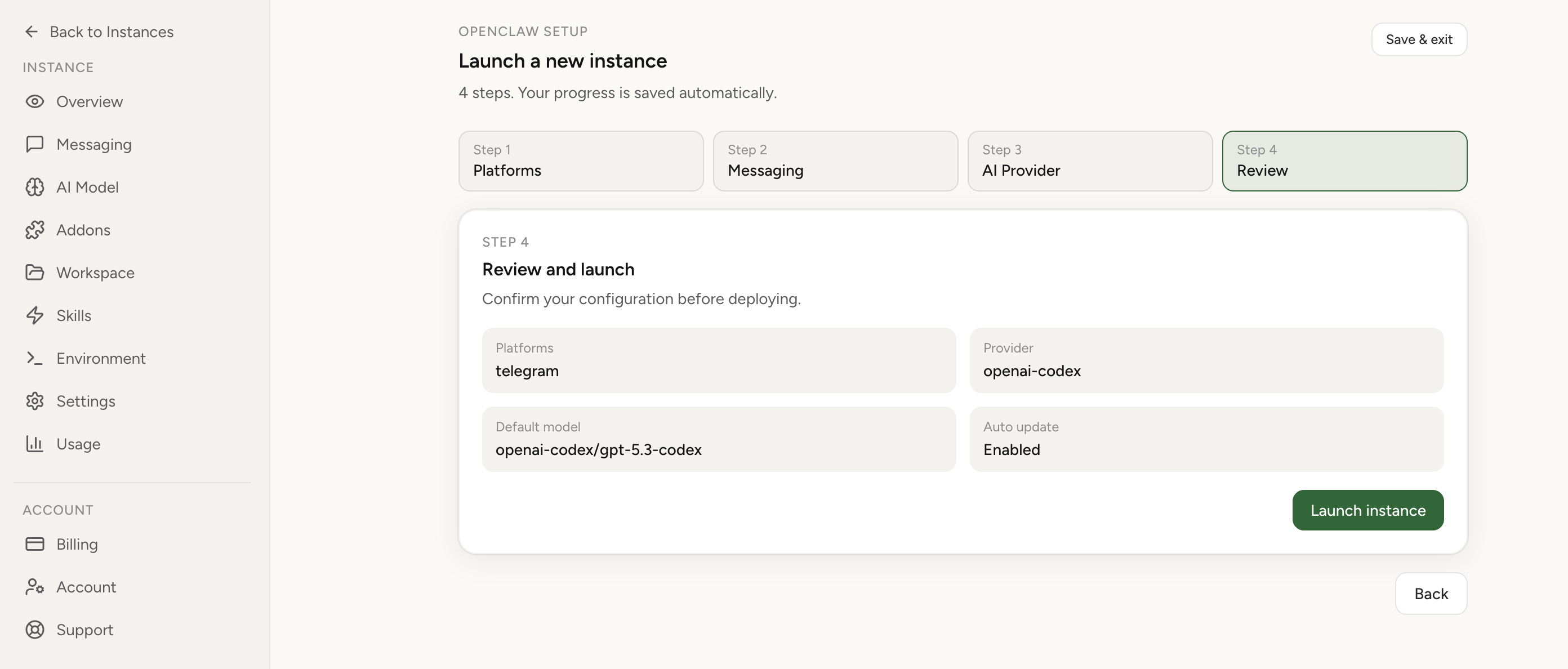
Lobsterland is built for teams that want managed OpenClaw hosting instead of a bare VPS project. The managed layer includes isolated runtimes, encrypted credentials, hosted browser options, Paperclip workspace support, multiple-agent management, dashboard controls, and operational help on an EU Hetzner Kubernetes basis described across the site.
That does not make Hostinger a bad choice. It makes the purchase question clearer: are you buying a cheap OpenClaw-capable VPS, or are you buying someone to help operate OpenClaw as a business service? For a non-technical user, those are not the same thing.
Migration path
A sensible path is to start cheap if you are experimenting. Use the VPS to learn whether OpenClaw fits your workflow. When the agent becomes business-critical, when several people rely on it, or when updates and channel recovery become a distraction, move to managed OpenClaw hosting for non-technical users or review the broader managed vs self-hosted comparison.
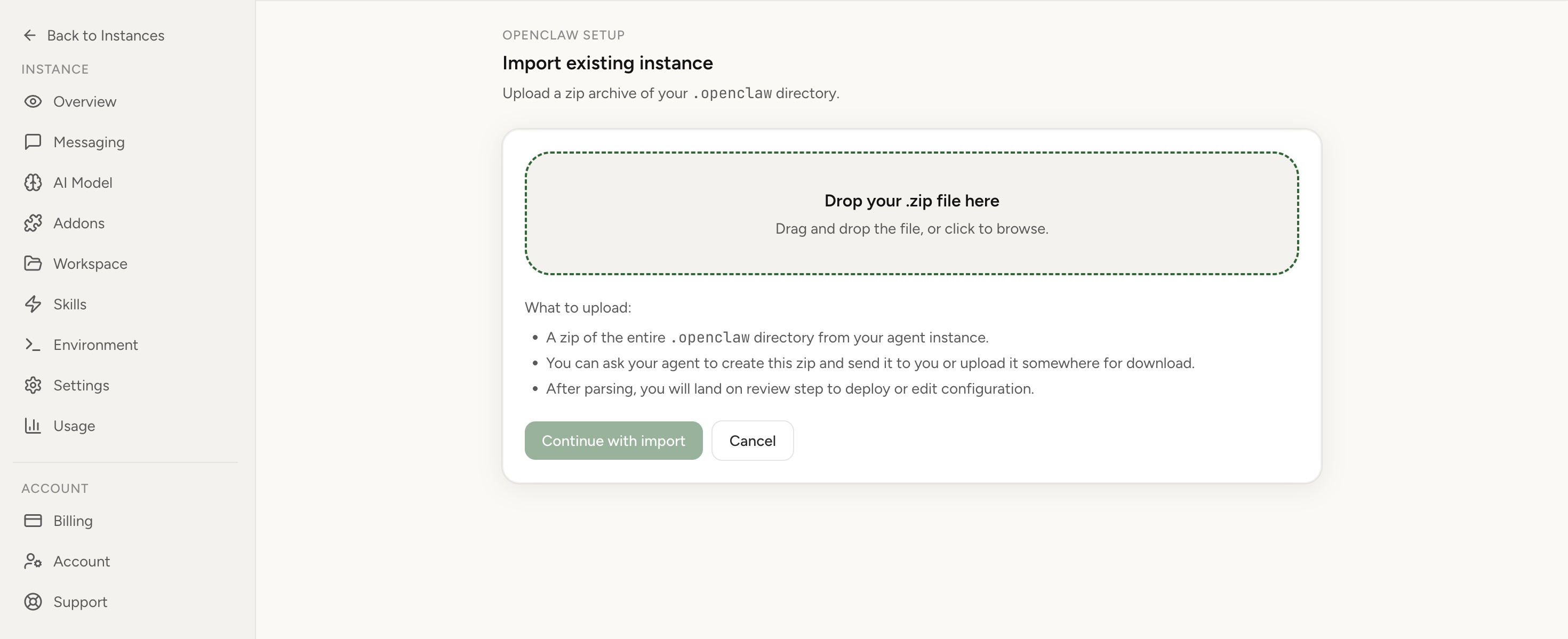
Teams already running an instance can also use the safe import checklist before moving context, credentials, and channels into a managed host. If you are still comparing cloud paths, the OpenClaw cloud hosting overview gives the bigger hosting picture, while the OpenClaw setup guide is the right reference if you still want to self-operate first. When you are ready to start or import a hosted instance, use app.lobsterland.ing/login.
Stop babysitting your OpenClaw box
Fix it once — or stop fixing it for good.
Apply the checklist above and keep self-hosting, or skip the maintenance entirely: run your OpenClaw on managed hosting from $6.90/mo, starting with a 7-day free trial. We handle the stale locks, gateway restarts, version upgrades, and uptime — and you can import your existing instance in a couple of minutes. Cancel anytime.
- Managed hosting handles stale
.jsonl.lockfiles, gateway restarts, and version upgrades for you - Import your existing OpenClaw setup in minutes — keep your channels and configuration
- The optional $199 setup is scoped: no custom development, enterprise/SRE support, or unsupported self-hosting repair
If you would rather compare options first, review OpenClaw cloud hosting or see the best OpenClaw hosting options before deciding.