OpenClaw doctor --fix rotated your gateway token: how to recover without breaking every client
Problem statement: you run openclaw doctor --fix to clean up a minor runtime issue, the command changes
gateway.auth.token, and the instance looks healthy for a few minutes. Then channel replies stop, browser relay fails to attach,
remote nodes ask for pairing again, or scheduled jobs keep running but cannot reach the gateway they used yesterday.
This is not a normal "restart and try again" problem. A gateway token is a trust boundary. When it changes, every client that talks to the gateway has to move with it. If one path keeps the old token while another path starts using the new one, OpenClaw can drift into a confusing half-working state: the dashboard loads, but a chat channel fails; a cron session starts, but a tool call is rejected; a browser process is alive, but the agent cannot attach to the tab.
This guide explains how to diagnose the rotation, recover safely, verify the full workflow, and prevent the same incident from recurring. If your team is already evaluating whether to keep owning these operational edges, compare the tradeoffs in managed versus self-hosted OpenClaw, review OpenClaw cloud hosting, or use OpenClaw Setup when you want the control plane to own credential propagation and runtime restarts.
-
A public OpenClaw issue opened on 2026-05-28 reports
doctor --fixsilently rotatinggateway.auth.tokenon a config that was already valid. The issue is tagged as auth-provider impact, security impact, and high-priority user-facing regression. - The same issue pattern is consistent with failures around channel pairing, browser relay, and remote access: the visible symptom is usually "agent stopped replying," while the real failure is stale trust material in one runtime path.
- OpenClaw Setup's managed runtime avoids treating gateway credentials as hand-copied text. Token-bearing settings live in the control plane, are injected into the runtime environment, and are verified through real channel and browser workflows after restart.
- The import flow exists because teams often arrive with working OpenClaw instances that became fragile after repeated repairs, upgrades, and manual secret edits. Preserving context is useful only if credential state is made boring again.
What actually changed
The gateway token is the shared secret that lets approved clients talk to the OpenClaw gateway. Depending on your setup, that can include the dashboard, local or hosted browser access, messaging adapters, webhook callers, remote nodes, cron-triggered sessions, and helper processes that call the gateway API. The token is not just a line in a config file. It is part of the identity relationship between the gateway and everything around it.
A repair command can be correct to rotate a token if the old token is missing, malformed, exposed, or impossible to validate. The dangerous case is different: the old token was still the active token for a working runtime, but the repair command replaced it without updating all dependent clients. That creates split-brain auth. Some paths believe the new token is true. Others keep using the old token. The operator sees a system that is neither fully broken nor fully healthy.
Common symptoms
- Pairing loops: a device, channel, or node asks to pair again even though it was already approved.
- Channel silence: Telegram, WhatsApp, Slack, or Discord receives inbound messages but cannot complete outbound replies.
- Browser attach failures: the relay or hosted browser process is reachable, but agent-side attachment is rejected.
- Cron confusion: scheduled jobs enqueue or start but fail when they call tools that need gateway access.
- Mixed dashboard state: the UI loads but operational actions fail, making the instance look healthier than it is.
- Webhook errors: external callers suddenly receive unauthorized responses after a routine maintenance command.
Do not start by rerunning repair
The tempting move is to run doctor --fix again. Resist it. If the first repair created token drift, a second repair can rotate the
token again or overwrite clues that tell you which part of the system is stale. You need a small incident workflow: freeze the state, identify the
active token locations, decide whether to restore or propagate, then restart and verify in the right order.
The goal is not to preserve the old token at all costs. The goal is to make every runtime path agree on one token. Sometimes that means restoring the old value from backup because it was still valid. Sometimes it means accepting the new value and updating every dependent client. What fails is mixing both.
Step-by-step recovery
1. Capture the current state before changing anything else
Save a backup of the current config, workspace files, and any channel-specific settings you can safely export. If you have a recent pre-repair backup, keep it separate. You need both views: the last known-good state and the current broken state. That lets you compare what changed instead of guessing.
2. Identify every gateway token consumer
Make a short list of clients that authenticate to the gateway. Include the obvious ones first: dashboard, Control UI, browser relay, hosted browser, messaging channels, webhook clients, cron sessions, and remote nodes. Then add anything custom: scripts, integration tests, internal tools, or a separate worker process. If a client can call the gateway, it belongs on the list.
3. Compare config, runtime environment, and client settings
The token can appear in more than one layer. A config file can hold one value. The running process environment can hold another. A client may have cached a third value. Compare those layers without printing secrets into shared logs or tickets. You only need to know whether the values match, where they differ, and which value was used by the last known-good runtime.
4. Choose restore or propagate
Restore the previous token if it was valid, not exposed, and still matches all dependent clients. Propagate the new token if the old one was compromised, invalid, or already replaced in the control plane. The wrong answer is to patch only the client you are currently staring at while leaving every other path stale.
5. Restart in dependency order
Restart the gateway first with the chosen token source. Then restart clients that hold long-lived connections: browser relay, hosted browser processes, messaging adapters, remote nodes, and workers. Finally, restart or re-run cron sessions that were created under the old credential state. This order reduces the chance that a stale client reconnects and makes the new state look broken.
6. Verify with real workflows, not only process checks
A green process is not enough. Send a real message through the primary channel. Attach to a real browser session if your agents use browser tools. Trigger one low-risk scheduled job. Call one gateway-dependent tool. If those pass, check logs for repeated unauthorized attempts from clients you forgot to update.
Stop babysitting your OpenClaw box
Fix it once — or stop fixing it for good.
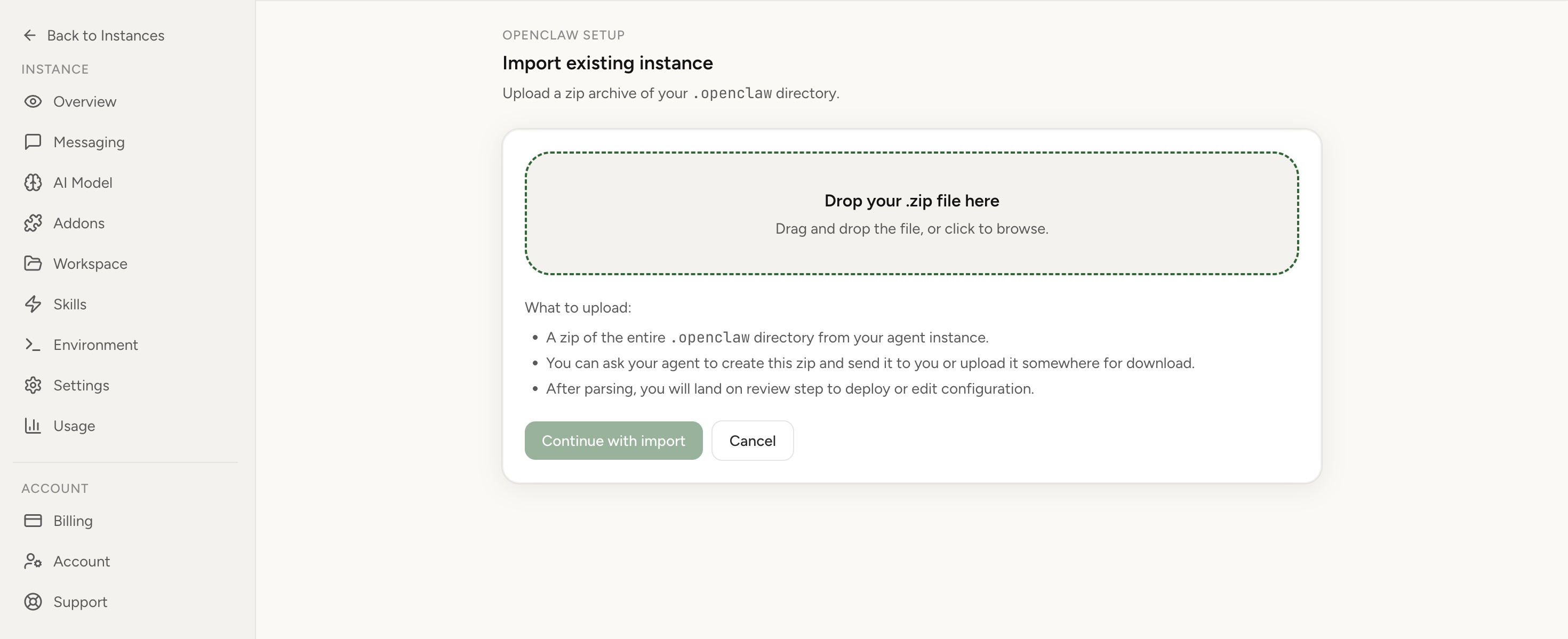
Apply the checklist above and keep self-hosting, or skip the maintenance entirely: run your OpenClaw on managed hosting from $6.90/mo, starting with a 7-day free trial. We handle the stale locks, gateway restarts, version upgrades, and uptime — and you can import your existing instance in a couple of minutes. Cancel anytime.
- Managed hosting handles stale
.jsonl.lockfiles, gateway restarts, and version upgrades for you - Import your existing OpenClaw setup in minutes — keep your channels and configuration
- The optional $199 setup is scoped: no custom development, enterprise/SRE support, or unsupported self-hosting repair
If you would rather compare options first, review OpenClaw cloud hosting or see the best OpenClaw hosting options before deciding.
Diagnostics checklist
- Gateway boot: the gateway starts with the intended token source and no repeated auth initialization errors.
- Dashboard path: the dashboard can perform an action that requires gateway auth, not just load static UI.
- Channel path: inbound and outbound messages both work in the channel your users actually use.
- Browser path: the browser process is reachable and an agent can attach to an existing or new session.
- Cron path: a scheduled task can start, call tools, and finish with the expected final response.
- Remote node path: any remote worker or local bridge reconnects without asking for a new pairing loop.
- Log path: unauthorized errors stop after the restart sequence rather than continuing in the background.
Edge cases that make this harder
The config file is correct, but the process still uses the old value
This happens when the running service reads environment variables, generated runtime files, or supervisor-managed settings rather than the file you edited by hand. If the process manager did not reload the environment, your file edit may be irrelevant until the service is restarted correctly.
A channel re-pairs successfully, but browser access still fails
Different clients can store credentials differently. Fixing Telegram or Slack does not prove that browser relay, hosted browser, or a local node updated its token. Verify each class of client separately.
Old cron sessions keep failing after the main instance is repaired
Scheduled sessions can preserve old assumptions about tools, environment, or gateway state. After token repair, run a fresh manual execution of the scheduled task. If the fresh run works and old queued runs fail, clear or restart the stale queue instead of chasing a new auth bug.
The old token was actually exposed
If the previous token was printed into logs, committed to a repository, sent into a shared chat, or stored in a place you do not trust, do not restore it just because it is convenient. Rotate deliberately, update every client, and treat old-token traffic as suspicious until it stops.
Typical mistakes
- Running repair commands repeatedly before capturing the current state.
- Updating only the dashboard path and forgetting messaging channels or remote nodes.
- Assuming a successful service restart means authenticated workflows are healthy.
- Copying tokens into shell history, tickets, or chat while debugging under pressure.
- Letting old queued cron runs keep retrying with stale credentials.
- Changing provider keys, channel tokens, and gateway tokens in the same maintenance window.
How to prevent recurrence
Treat gateway credentials as managed runtime state, not as a note someone pastes between files. Keep a backup before repairs and upgrades. Record where the gateway token is sourced from. Put browser relay, messaging channels, remote nodes, and cron into the post-repair verification checklist. Most importantly, avoid combining credential changes with unrelated maintenance. If you are fixing web search, do not also rotate gateway auth. If you are upgrading OpenClaw, do not also migrate channels unless you have a rollback plan for both.
Teams using OpenClaw for real operations should also decide who owns token rotation. If nobody owns it, every repair is a production risk. A managed control plane helps because it gives token state one home, runs restarts through a predictable path, and turns verification into an operating habit instead of a memory test.
FAQ
Is token rotation always bad?
No. Rotation is the right answer when a token is exposed, weak, invalid, or impossible to trust. The problem is silent or partial rotation that does not update every client that depends on the token.
Can I recover without a backup?
Usually, but it takes more care. You need to pick one token source, update every dependent client, and verify each workflow. A backup makes it easier to determine whether the old token was the last known-good value.
Should I rotate provider API keys too?
Not unless there is evidence they were exposed or changed. Provider keys and gateway tokens solve different problems. Rotating both at once makes the incident harder to debug.
What is the commercial decision point?
If your team can document token ownership, backup before repairs, and verify every client after maintenance, self-hosting can work. If the same class of credential drift keeps interrupting useful work, managed OpenClaw hosting is not only convenience; it is a cleaner operating model.